How to Rank in Google Maps (Without Gaming the System)
Learn what factors Google uses to rank businesses in Maps — and the exact steps local service businesses can take to show up higher in the Map Pack.

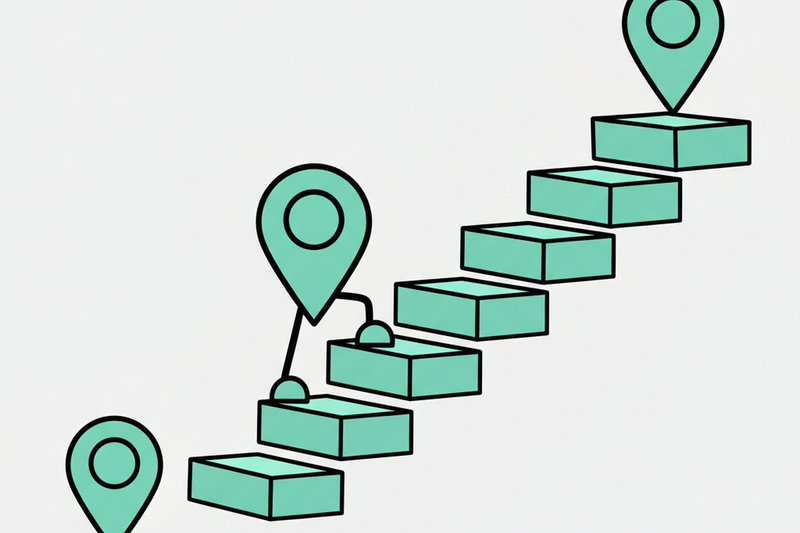
You know the feeling. You search your own service in your city, and a competitor shows up three spots above you in the Map Pack. Same town, same trade, worse reviews, and yet they’re the one getting the calls.
If you’re trying to figure out how to rank in Google Maps for your city, stop thinking like a blogger for a minute. Local discovery usually starts on the decision screen people tap first: Google Business Profile and the Map Pack.
Below is the plain-English breakdown of what drives google maps ranking, plus a short fix list you can knock out this week.
What Google looks at for google maps ranking (and what you can control)
Google has said for years that local results come down to relevance, distance, and prominence. If you want the source straight from Google, start with Google’s tips to improve local ranking. That short doc is still the backbone.
Here’s the practical version you can use in the real world.
First, relevance is “are you a match for what they typed?” Google learns that from your Google Business Profile categories, services, business description, on-site content, and even your reviews.
Next, distance is proximity to the searcher (or the location in their query). You can’t fully control it, and you shouldn’t try to “hack” it. Instead, you build strength where you can: relevance and prominence.
Finally, prominence is how established and trusted you look. Reviews, citations, links, and brand mentions all feed it. Strong prominence can help you show more often across your service area, even when proximity isn’t perfect.
Here’s a quick cheat sheet to keep you focused:
If you only remember one thing: proximity sets the ceiling for many searches, but relevance and prominence decide who wins inside that ceiling.
If you want a deeper, prioritized view of these factors, Searcle AI’s breakdown of local ranking factors lays out a useful action order for 30 to 90 days.
It's also worth reading our take on strategies for getting more Google reviews if you haven't yet.
Map Pack first: fix your Google Business Profile before writing another post
A lot of owners get told, “publish more blogs.” That advice isn’t evil, it’s just out of order. Blog content can help local organic rankings, but it rarely fixes a weak Map Pack presence by itself.
If you want to rank in Google Maps in your city, treat your Google Business Profile like your storefront sign, not a set-and-forget listing.
Start with the parts that most often decide relevance:
Categories and services
Your primary category is a big deal. So are your secondary categories. Pick what you truly are, not what you wish you were. Then fill out services so Google has clean, readable details about what you do.
Attributes, hours, and “small” fields
Those tiny fields are not tiny to Google. Add attributes that apply, set holiday hours, and keep everything current. Messy hours can lead to bad user signals fast (people show up, you’re closed, they bounce).
Photos and short videos
Fresh media helps conversion, and it also helps Google trust the profile is active. Post real work: trucks, team, before and after, the shop, the front door. Phone-quality is fine if it’s clear.
Posts, Q&A, and FAQs
Posts aren’t magic, but they’re consistent activity and good context. Q&A is even better when it reflects what customers ask on the phone.
If you’re busy, use this simple weekly rhythm:
- Update or add 3 to 5 photos.
- Publish 1 post (offer, seasonal note, or project highlight).
- Reply to every new review (good and bad).
- Check categories, services, and hours for drift.
- Answer one Q&A question (or seed a common one).
This is the boring part, and that’s why it works. Local rewards cadence, not random stunts.
Reviews and citations: the trust signals that move rank and callers
Reviews are not “just social proof.” They are rankings fuel and a conversion engine at the same time.
In practice, three review inputs matter most:
- Volume: you need enough reviews to look like a real choice.
- Velocity: you keep getting new ones, not just a burst from 2022.
- Language: customers often mention services, neighborhoods, and job types, which helps relevance and persuades the next buyer.
At Curve, we install a simple “Review OS” for clients because it takes willpower out of the equation. You request, you follow up once or twice, and you reply with a consistent playbook. The win is two-sided: you build trust for humans, and you send clearer signals to Google.
Real-world results show up quickly when reviews are the missing piece. In one home services account, we saw a move from Map Pack position #9 to #3 in about 60 days, along with a 38% lift in calls. In a med spa, the average rating rose by about 1.1 stars in 90 days, review velocity doubled, and bookings increased. No promises, just what can happen when you fix fundamentals and keep the pace.
Citations matter here too. If your business name, address, or phone number is inconsistent across the web, Google has to guess. Guessing rarely helps you rank.
So aim for clean, durable listings on the big platforms (Apple Maps, Bing, Facebook) and a solid set of high-value directories. A practical approach is building a core batch of manual citations early (often around 30 to 40), then maintaining accuracy. You don’t always need a forever subscription to do that.
One more “don’t ignore it” item: duplicates. Duplicate listings can split signals and confuse customers.
For extra context on how Maps, organic, and AI-style results are blending, Kyle Eggleston’s 2026 local SEO ranking factors overview is a helpful read.
A short fix list you can tackle this week (plus what to expect in 30 to 90 days)
If you want traction fast, you need actions that hit the Map Pack directly. That means Google Business Profile and reviews first, then citations, then your website.
Here’s a tight “do this now” plan:
Day 1: Clean up your GBP basics
Fix categories, hours, service list, and service areas. Add attributes you’ve ignored.
Day 2: Upgrade your media
Upload 15 to 25 real photos. Add 2 short videos. Make your cover photo obvious and clean.
Day 3: Write and publish one GBP post
Pick one service and one city-area tie-in. Keep it simple. Add a call button or booking link if you have it.
Day 4: Turn on a review request flow
Text or email every completed job. Follow up once. Keep the message short.
Day 5: Reply to reviews
Thank happy customers, and mirror their service language naturally. Stay calm on negatives and offer a next step.
Day 6: Fix your listings
Correct your NAP on your top profiles first. Then work outward to directories.
Day 7: Set up basic attribution
At minimum, track calls, form fills, and direction requests so you can connect work to outcomes.
You can move fast in week one. Still, defensible google maps ranking usually builds over 30 to 90 days. That’s normal. What you should watch early are leading indicators: more profile views, more calls from GBP, more direction taps, and steady review velocity.
Bottom line: win your neighborhood first, then expand. When you own the money terms closest to you, the pipeline gets calmer.
If you want this handled for you, take one clear next step: Start for $500/mo — your Local SEO OS.
If you're working through this, our how local citations work for service businesses post walks through the details.
Related: our GBP optimization checklist.