
How Long Does Local SEO Take? (Honest Answer, No Hedging)
You search “plumber near me” on your phone, and the same three competitors keep showing up. Meanwhile, you’re the one actually answering the phone, doing clean work, and fixing problems fast. So you do what every owner does next. You ask: how long does local SEO take for a small business? Here’s the plain answer: [ ]

You search “plumber near me” on your phone, and the same three competitors keep showing up. Meanwhile, you’re the one actually answering the phone, doing clean work, and fixing problems fast.
So you do what every owner does next. You ask: how long does local SEO take for a small business?
Here’s the plain answer: local SEO can move early, but it compounds. If you want a steady pipeline (not a one-week spike), plan for a real local SEO timeline: what shifts in month 1, what becomes obvious by month 3, and what starts to feel “unfair” by month 6.
A realistic local SEO timeline (month 1 vs month 3 vs month 6)
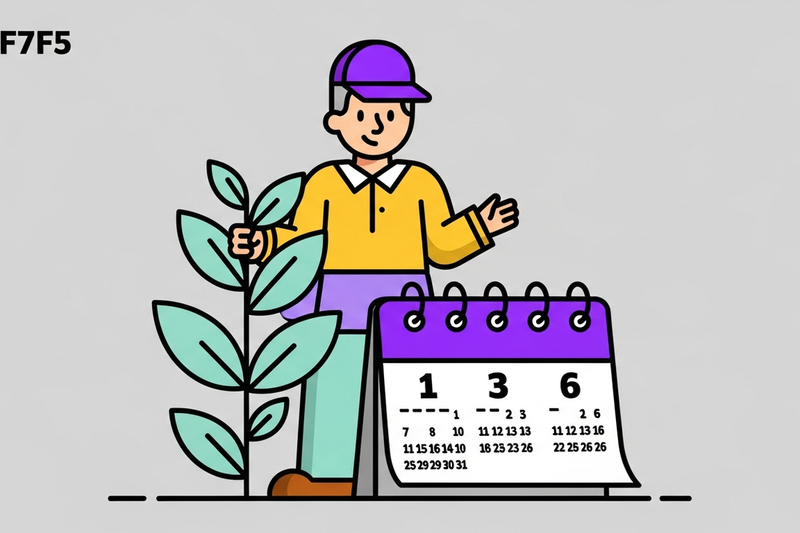
[Image: An at-a-glance 6-month local SEO timeline, showing what typically changes first, and what compounds later (created with AI).]
Local SEO usually doesn’t “kick in” all at once. It stacks. Think of it like repainting a work truck. The first coat looks better, but the real difference shows after a few passes and touch-ups.
Use this table as your expectation setter:
If you want meaningful lift, give it about 90 days. You might see wins earlier, but month 3 is where you can judge the direction with a straight face.
If you’d like another operator’s perspective on timing, this breakdown of how long local SEO takes lines up with what you’ll see in the field: early movement, then steadier results as signals pile up.
What should move in the first 30 to 90 days (and why it’s not magic)
Month 1 is about removing friction. Most small service businesses don’t have an “SEO problem” as much as they have a consistency problem.
Here’s what matters most early on:
First, your Google Business Profile (GBP) needs to be clean and complete. Categories, services, attributes, hours, and a real stream of photos all shape what you show for. If your competitor has 200 photos and you have three, Google notices, and customers do too.
Next, you want NAP consistency (name, address, phone) across the listings that actually count. Done right, this often looks like building or fixing roughly 35 high-value citations over your first 60 to 90 days, not paying forever for a subscription you don’t need.
Then you set up tracking you can trust. Rankings are fine, but they don’t pay payroll. You care about calls, form fills, and direction requests, so you should tag links with UTMs and make sure you can attribute leads to local efforts. When heatmaps are useful (multi-provider clinics, competitive suburbs), they make the “before vs after” easy to see.
By month 3, momentum comes from two places:
- Reviews that pull double duty: they build trust and they can support relevance when customers mention the service and city naturally.
- Week-by-week activity: posts, photos, review replies, Q&A, and small fixes. The boring stuff compounds.
A quick real-world example: in one home services account, moving from Map Pack #9 to #3 took about 60 days, and calls rose about 38%. That came from coordinated basics, not a stunt.
If you’ve been burned by “weekly calls” that led nowhere, you’re not alone. In practice, you don’t need status theater. You need steady output, then a simple monthly recap that says what changed, why it mattered, and what’s next.
What changes by month 6 (and what still won’t)
[Image: By month 6, consistency tends to translate into more visible Maps presence and more calls (created with AI).]
By month 6, you’re usually not “done.” You’re finally hard to ignore.
Here’s what feels different:
Your best “money terms” (service + city, and service + near me) show more often in the Map Pack. You might not win every keyword, but you’ll win the ones that keep crews busy.
You also get more repeatable lead flow, because your profile and site now match what people want. Clear services, strong proof, and fresh activity reduce the friction that kills conversions. Even when rankings wobble, you don’t fall off a cliff.
At the same time, a few things still won’t happen automatically:
- A weak website won’t turn into a strong one by accident.
- A business with five reviews won’t look “established” next to a competitor with 400.
- A new location won’t outrank a 15-year incumbent overnight.
If you’re curious who’s behind a calm, process-first approach to this stuff, you can skim the Curve SEO studio overview to see how the team thinks about building predictable systems.
Also, if you’re hoping SEO will act like ads, it won’t. Ads stop the moment you stop paying. Local SEO is slower, but it sticks, which is the whole point.
For another practical take on speed and lead timing, this piece on how fast SEO can deliver leads gives a helpful framing for what “fast” really means in local.
What slows everything down (and how you avoid it)
[Image: Common roadblocks that push your timeline out, even when you’re doing “SEO” (created with AI).]
Local SEO feels slow when the basics fight you. Five problems cause most delays:
- Heavy competition: If three competitors have 1,000 reviews and real brand searches, you need more time and tighter execution.
- Inconsistent citations: Old phone numbers, duplicate listings, or mismatched addresses can mute everything else.
- Weak website fundamentals: Slow pages, thin service pages, or confusing navigation makes Google and customers hesitate.
- Low review velocity: Getting from 20 to 30 reviews rarely changes much. Getting from 20 to 120, with steady monthly pace, often does.
- Limited time or budget: Local SEO rewards cadence. Long gaps between updates drag out the timeline.
The fastest “hack” is boring: pick a weekly rhythm you can keep, then protect it like you protect your schedule.
If you want to speed things up without chaos, start with two moves: tighten your GBP (categories, services, photos) and install a simple review request flow your team can run every day. Those two steps usually create the earliest lift.
The bottom line
A real local SEO timeline isn’t about waiting in the dark. It’s about doing the right small work, every week, then measuring what matters: calls, forms, and direction requests. Give it 30 days to clean up the foundation, about 90 days to judge momentum, and six months to feel the compounding effect.
If you want a steady, low-drama way to run this, take one next step: See how Curve’s $500/month plan works.